How AI Pronunciation Coaching Works (And Why It Isn't Magic)
A clear, honest look at the technology behind AI pronunciation coaching — what it does well, and what it cannot do.
By the Ledoly team
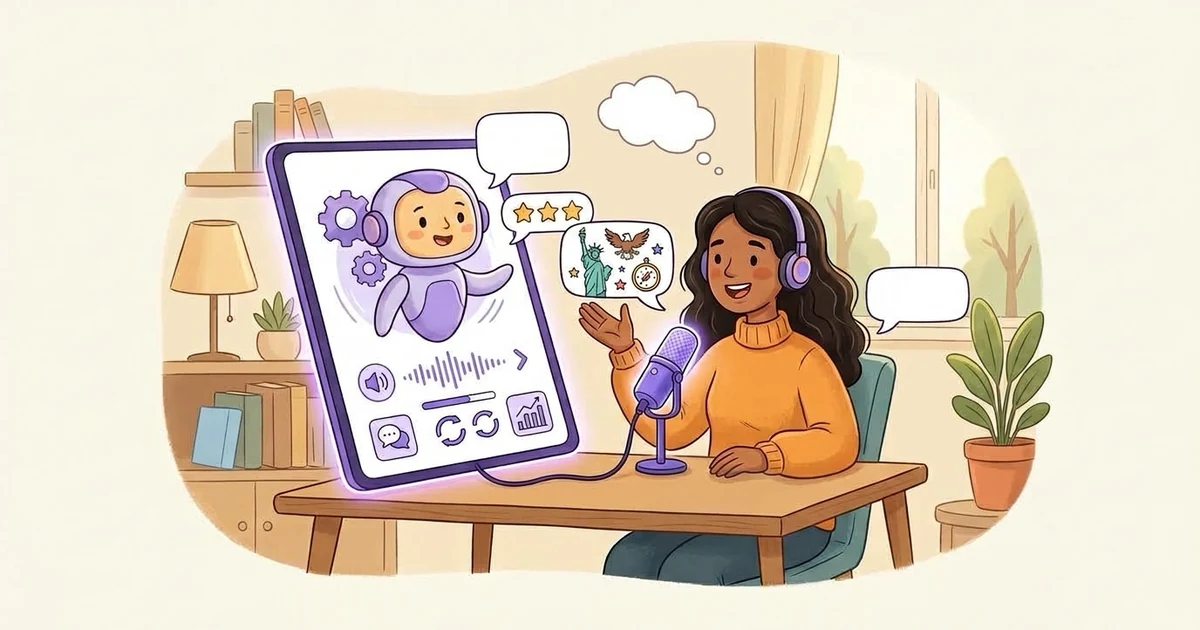
AI pronunciation coaching works by recording your speech, breaking it into individual sounds, comparing each sound to native-speaker models, and showing you exactly which sounds were off. It is not magic and it does not "understand" speech the way a human coach does — it is precise pattern-matching, and knowing how it works helps you use it well.
This article is editorial, not a sales pitch. AI pronunciation tools, Ledoly included, are genuinely useful, but only when you understand what they actually do. Treat the AI as a fast, tireless feedback instrument — not as an all-knowing teacher.
The core problem AI solves
The hardest part of practicing pronunciation alone is that you cannot reliably hear your own errors. Your brain has spent years tuned to Vietnamese sound categories, so when you say "think" with a /t/ instead of /θ/, it can sound correct to you. Without feedback, you practice the mistake and reinforce it.
A human coach solves this by listening and correcting you. But coaches are expensive, hard to schedule, and cannot sit with you for every one of the thousands of repetitions a sound needs. AI feedback fills that gap: instant, consistent, and available on every single attempt.
Step 1: Speech recognition turns sound into data
When you speak into the app, your voice is captured as an audio waveform. The system runs automatic speech recognition (ASR) — the same family of technology behind voice assistants — to work out which words and sounds you produced.
Pronunciation coaching uses ASR differently from a voice assistant, though. An assistant only needs the gist of your words. A pronunciation tool needs to know how accurately each sound was produced, so it aligns the audio to the expected sounds and measures the match. The interesting work is in that measurement.
Step 2: Phoneme-level grading
A phoneme is the smallest unit of sound that distinguishes one word from another — the /θ/ in "think," the /r/ in "right," the final /t/ in "worked." Good AI coaching grades at the phoneme level, not just the whole word.
This matters. A word-level score that says "62%" tells you that you were wrong somewhere but not where. A phoneme-level breakdown can tell you that your vowel was fine, your TH was missed, and your final consonant was dropped. That is the difference between vague feedback and an actionable correction.
To produce that, the system compares the acoustic features of each sound you made against models of how native speakers produce the same sound, and scores how close you were.
When a pronunciation tool gives you a score, do not stop at the number. Look for the sound-by-sound breakdown. The specific sound it flags is your actual practice target — the overall score is just a summary.
Step 3: Why Vietnamese-aware grading matters
Here is where a tool built for Vietnamese speakers differs from a generic one. Vietnamese speakers make a predictable set of errors: substituting /t/ for /θ/, dropping final consonants and clusters, flattening English rhythm, and confusing certain vowel pairs.
A generic pronunciation app may simply tell you a word was "wrong." A Vietnamese-aware system can do something more useful — it knows the likely cause. When it detects a missing TH, it can recognize the common Vietnamese substitution pattern and give you targeted guidance on tongue position, rather than a generic "try again." Ledoly's grading is tuned around the specific phonological patterns of Vietnamese speakers for exactly this reason.
Step 4: Instant feedback closes the loop
The real value of AI is speed. Motor learning — and pronunciation is a motor skill, like a sport — improves fastest when feedback arrives immediately after the attempt. Wait an hour and the connection between what your mouth did and what was wrong is already weaker.
AI delivers that feedback in under a second, on every repetition. You say a word, see precisely what was off, adjust, and try again. Over a 15-minute session you can run that loop dozens of times. That tight, high-volume practice cycle is what AI does better than any other format.
What AI pronunciation coaching does well
- Consistent, objective feedback — it does not get tired, distracted, or unintentionally lenient.
- Unlimited practice volume — you can repeat a sound 200 times without inconveniencing anyone.
- Pinpointing errors — a phoneme-level system shows you the exact sound to fix.
- Always available — practice at 6 a.m. or 11 p.m., no scheduling.
- Progress tracking — it logs every attempt, so improvement over weeks is measurable.
What AI cannot do — the honest limits
Being clear about the limits is what makes AI feedback trustworthy.
- It does not judge real conversation. AI grades sounds and words well. It cannot tell you whether your tone fit the meeting or whether your phrasing sounded natural and appropriate.
- It can be thrown off by audio conditions. A noisy room or a poor microphone can produce a misleading score. A human coach hears past the noise.
- It cannot explain like a teacher. AI flags the error; it does not always sit with you, notice you are frustrated, and re-explain the concept three different ways.
- It is not perfectly accurate. Speech grading is high-quality pattern-matching, not certainty. Occasionally it scores a good attempt poorly, or the reverse. Treat scores as strong guidance, not absolute truth.
- It will not build the habit for you. The AI shows you the gap. Closing it still takes your daily, consistent practice.
If a score looks clearly wrong, check your environment first — background noise and a weak microphone are the usual culprits. Move somewhere quiet and retry before assuming your pronunciation was the problem.
How to actually use it well
Treat AI as the high-volume drilling layer of your practice. Use it to find your error sounds, drill them in tight feedback loops, and track progress. Then take those sounds into real speaking — conversation, shadowing, narrating your day — where the AI cannot follow. Many learners get the best results pairing AI practice with occasional human feedback, a combination we explore in our article on self-study versus learning with a teacher.
If you want to understand the underlying sounds the AI grades, our guides on the TH sound and connected speech are good companions, and the phoneme chart shows the full sound inventory.
Frequently asked questions
Is AI pronunciation feedback accurate?
Modern AI pronunciation grading is accurate enough to be genuinely useful, especially at the phoneme level, but it is not perfect. It works by pattern-matching your speech against native models, so background noise or a poor microphone can skew a score. Treat the feedback as strong, reliable guidance rather than absolute truth.
Can AI replace a human pronunciation coach?
No — and it is not designed to. AI excels at high-volume, instant, sound-level feedback that a human cannot match for sheer repetition. A human coach excels at explanation, motivation, and judging real conversation. The strongest results usually come from using both together.
What does "phoneme-level grading" mean?
It means the system scores each individual sound in a word rather than only giving one score for the whole word. Instead of "your word was 62% correct," you learn that your vowel was fine but your TH was missed and your final consonant dropped — which tells you exactly what to practice next.
Why does Ledoly grade differently for Vietnamese speakers?
Vietnamese speakers share a predictable set of pronunciation errors driven by differences between Vietnamese and English. Tuning the grading around those known patterns lets the system identify the likely cause of an error and give targeted guidance, rather than a generic "incorrect" that does not tell you how to fix it.
Curious what a phoneme-level grade looks like for your own speech? Try the 60-second pronunciation check and see a sound-by-sound breakdown of your pronunciation.