Common English Idioms for Daily Conversation
Learn eight useful idioms for ease, health, frequency, social comfort, stopping work, shared understanding, shared difficulty, and starting action.
By the Ledoly team
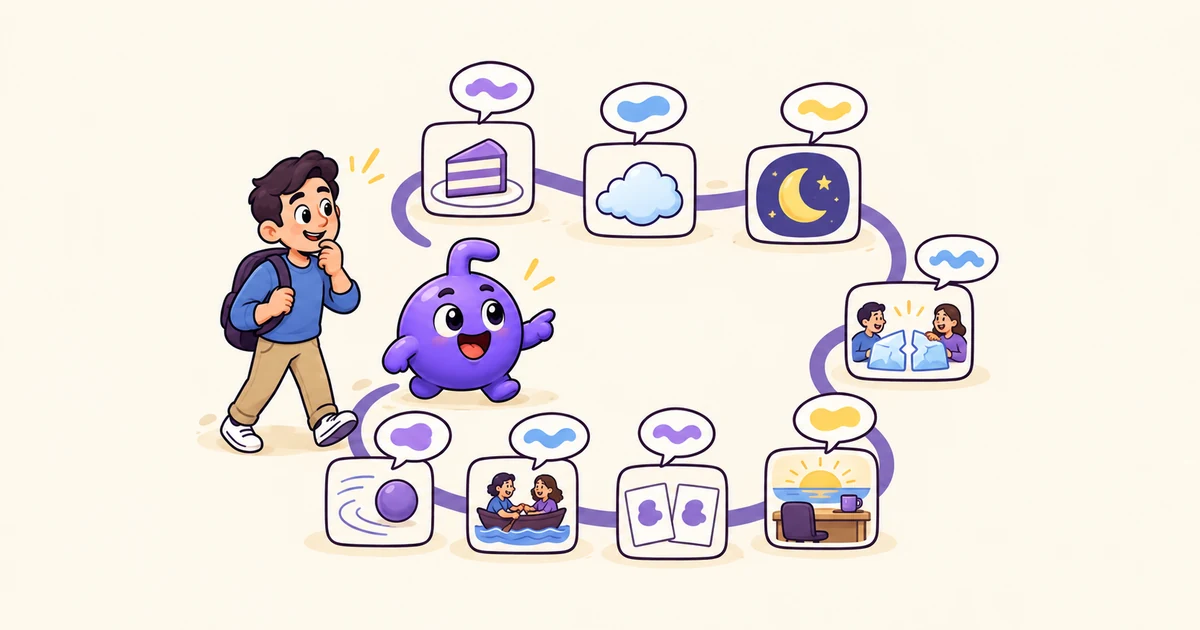
Eight common English idioms for daily conversation are a piece of cake, under the weather, once in a blue moon, break the ice, call it a day, on the same page, in the same boat, and get the ball rolling. Learn each expression as a complete phrase, then match it to a real situation instead of translating each word.
An idiom has a conventional meaning that may not be obvious from its individual words, so learn the complete phrase with one real situation. “The test was a piece of cake” means the test was easy; it does not describe food.
Eight idioms at a glance
| Idiom | Meaning | Tone and risk | Workplace use |
|---|---|---|---|
| a piece of cake | Something very easy to do | Informal; may sound dismissive if another person found the task difficult | Safe in friendly talk about your own task; use straightforward in formal writing |
| under the weather | Feeling slightly unwell | Informal; not rude | Usually safe for a brief general explanation; it is not a medical description |
| once in a blue moon | Very rarely | Conversational; not rude | Safe in casual discussion; use rarely when precision matters |
| break the ice | Make people feel more relaxed and start talking, especially when they first meet or a situation feels awkward | Informal; not rude | Workplace-safe for introductions, workshops, and new groups |
| call it a day | Stop working or stop an activity for now | Informal; not rude | Safe with peers when stopping is a shared decision; be careful if you do not have authority to end the work |
| on the same page | Have the same understanding or priorities | Common workplace idiom; not rude | Workplace-safe, but state the actual decision when precision matters |
| in the same boat | In the same difficult situation | Conversational; not rude | Usually safe when it recognizes a genuinely shared problem |
| get the ball rolling | Start an activity or encourage action to begin | Conversational; not rude | Workplace-safe for projects, discussions, and planning |
1. A piece of cake
Use a piece of cake when something is very easy to do.
“Once Mia showed me the steps, changing the setting was a piece of cake.”
Be considerate. If Sam struggled with a task, saying “That was a piece of cake” may sound as if you are judging him. You can say, “It became easier after I saw an example.”
2. Under the weather
If you feel under the weather, you feel slightly unwell.
“I’m feeling under the weather, so I’m going to rest this evening.”
The idiom is useful for a general statement, but it does not name a condition or give medical information.
3. Once in a blue moon
Once in a blue moon means very rarely.
“Ben cooks at home most nights, but once in a blue moon he orders pizza.”
Do not use it when you need an exact frequency. “The review happens twice a year” is clearer than an idiom in a policy or schedule.
4. Break the ice
To break the ice is to make people feel more relaxed and start talking, especially when they first meet or a situation feels awkward.
“Emma asked everyone about their favorite lunch spot to break the ice.”
A simple introduction can do the same job. Ledoly’s guide to introducing yourself at work provides short, literal phrases for that first exchange.
5. Call it a day
Use call it a day when you stop working or stop an activity because you have done enough for now.
“We’ve finished the urgent changes. Let’s call it a day and review the rest tomorrow.”
Context shows whether the speaker means “stop for today” or “stop for good,” as in “After 30 years as a nurse, Mia decided to call it a day.”
6. On the same page
People are on the same page when they share the same understanding, plan, or priorities.
“Before we send the proposal, let’s make sure we’re on the same page about the deadline.”
After using the idiom, name the actual point: “The final deadline is Friday at noon.” Shared understanding is easier to check when the key detail is explicit.
7. In the same boat
If people are in the same boat, they are dealing with the same difficult situation.
“All four teams are waiting for the new schedule, so we’re in the same boat.”
Use the idiom only when the difficulty is genuinely shared. Do not assume that everyone’s experience or impact is equal.
8. Get the ball rolling
To get the ball rolling is to start an activity or take the first action that encourages progress.
“I’ll get the ball rolling by sending a draft agenda this afternoon.”
This idiom is common in project talk because the speaker can immediately name the first action.
Idioms, slang, and phrasal verbs are different
- Idiom: a fixed or conventional expression whose meaning may not be clear from each word, such as under the weather.
- Slang: very informal vocabulary associated with particular groups, places, or periods.
- Phrasal verb: a verb plus a particle, such as follow up. Some meanings are literal and some are idiomatic.
For standard workplace verb combinations, see Ledoly’s guide to office phrasal verbs. For language that helps you enter and hold the floor, use phrases for speaking up in meetings.
Practice: match the idiom to the situation
Choose from break the ice, call it a day, on the same page, in the same boat, and get the ball rolling.
- Two new teams are quiet at the start of a workshop. Emma asks an easy question to help everyone relax.
- Ben sends the first draft so the project can begin.
- Mia and Sam repeat the deadline to confirm that they share the same understanding.
- Every department is waiting for the same approval.
- The team has completed the planned work and agrees to stop for today.
Answer key
- Emma asks an easy question to break the ice.
- Ben sends the first draft to get the ball rolling.
- Mia and Sam confirm that they are on the same page.
- Every department is in the same boat.
- The team decides to call it a day.
Frequently asked questions
What is an English idiom?
An idiom is a conventional expression whose full meaning may not be obvious from the meanings of its individual words. “A piece of cake,” for example, can mean something that is very easy to do.
Are idioms appropriate at work?
Many common idioms are fine in conversation, but clarity comes first. Use plain language in policies, contracts, safety instructions, and communication where a literal meaning is important.
Is an idiom the same as slang?
No. An idiom is defined by its conventional, often nonliteral meaning. Slang is defined more by its highly informal register and connection to a group, place, or period. An expression can be both idiomatic and informal.
What is the best way to remember idioms?
Learn one complete phrase with one realistic situation. Write an original sentence, say it aloud, and review it later in a different context. Do not memorize only a word-for-word translation.
Sources
- Dictionary.com entries for a piece of cake, under the weather, once in a blue moon, and break the ice — meaning and register checks.
- Dictionary.com entries for call it a day, in the same boat, and get the ball rolling, plus Oxford Advanced American Dictionary: on the same page — meaning, usage, and workplace-context checks.
- Dictionary.com: idiom — reference for the distinction between an idiom’s established meaning and the literal meanings of its words.