How to Speak Up in Meetings: Turn-Taking Phrases
Speak up in meetings with a simple turn-taking pattern: signal your move, state its purpose, make one short point, and hand the conversation back.
By the Ledoly team
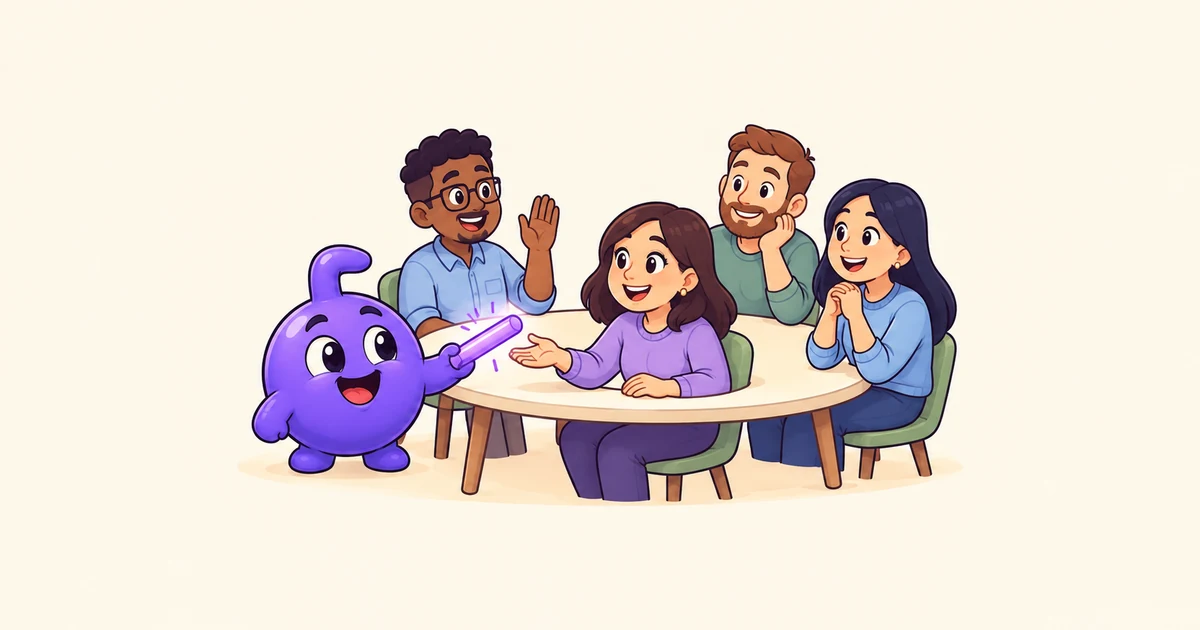
To speak up in an English meeting, signal that you want the turn, name your purpose, make one short point, and hand the conversation back. For example: “Could I add one point? We still need a date for the test. Sam, do you want to take that?” This pattern helps other people understand both your message and your place in the conversation.
This lesson is about turn management: how to enter, keep, redirect, and yield a turn. It does not teach agreement or disagreement. Those are separate communication choices.
Choose the move you need
| Situation | Useful opening | What comes next |
|---|---|---|
| Join after a pause | Could I add one point? | Give the point in one or two sentences. |
| Interrupt for a reason | Sorry to jump in, but can I clarify one detail? | Ask the exact question. |
| Hold your turn | Let me finish this point, then I’ll come to that. | Finish briefly and invite the other person. |
| Check meaning | Before we move on, what does “ready” mean here? | Name the word or decision that is unclear. |
| Return to the agenda | Could we return to the timeline for a moment? | Connect the group to the current goal. |
| Yield the turn | That’s my main point. Ben, what do you think? | Stop and leave space for the next speaker. |
1. Join the conversation after a pause
A short pause is often the simplest place to enter. Start with a compact signal:
- “Could I add one point?”
- “Can I chime in here?”
- “I have a quick question about the deadline.”
- “There’s one detail I’d like to check.”
Then state the point. Do not spend so long introducing it that someone else takes the next turn.
Emma: We’ll test the new page next week.
Mia: Could I add one point? We still need to choose who will collect the results.
If you are meeting the group for the first time, Ledoly’s guide to introducing yourself at work covers that earlier moment. Once the meeting begins, use the shorter turn signals here.
2. Interrupt only with a clear purpose
Sometimes waiting would create more confusion. A polite interruption usually works best when it contains both a brief apology and a reason:
- “Sorry to interrupt, but which version are we discussing?”
- “Sorry to jump in, but can we confirm the date?”
- “Can I stop you there for a second? I missed the last step.”
- “Before you continue, could I check one number?”
The reason matters. “Sorry to interrupt” by itself announces an interruption but does not help the group see why it is useful.
Ben: After the review, Sam will send the—
Emma: Sorry to jump in, but can we confirm which review you mean?
Ben: The design review on Thursday.
Emma: Thanks. Please continue.
For more ways to repair a communication problem, see how to ask someone to repeat or clarify.
3. Hold your turn without fighting for it
If someone starts while you are still making your point, acknowledge the attempt and show when you will finish:
- “Let me finish this thought, then I’ll come to you.”
- “One more sentence, and then I’m done.”
- “I’ll finish the example, then please jump in.”
- “Hold that thought for a second; my next point answers it.”
Keep the promise. If you say “one more sentence,” do not add a new topic. A clear ending makes it easier for the next speaker to enter.
4. Ask for the exact clarification you need
A general “I don’t understand” can make the other person repeat too much. Point to the missing piece:
- “When you say ‘launch,’ do you mean the public release or the internal test?”
- “Could you clarify what changes on Friday?”
- “Are you asking Mia to draft the email or send it?”
- “Can I check the action item? Ben will update the file by noon, right?”
This moves the meeting forward because the speaker knows what to explain or confirm.
5. Return to the point or agenda
A redirect should recognize the new topic without letting it take over:
- “That’s useful context. Could we return to the timeline?”
- “Can we park that question and finish the budget item first?”
- “To bring us back to today’s decision, who owns the next step?”
- “We may need a separate discussion for that. For now, can we confirm the date?”
Park means save a topic for later, not ignore it. If the group parks a point, someone should record it and decide how to follow up.
Sam: We should also discuss next year’s training plan.
Mia: Let’s park that for a separate discussion. To bring us back to today’s decision, can we confirm the launch date?
6. Yield the turn clearly
A useful contribution needs an ending. Signal that you are finished and, when helpful, name the next speaker:
- “That’s my main point.”
- “Those are the two details I wanted to raise.”
- “Ben, would you like to add anything?”
- “Emma, can you take us through the next step?”
In a remote meeting, a name can be especially useful because visual turn signals may be harder to read. Similar identification and confirmation language also appears in Ledoly’s guide to English phone-call phrases.
Practice: choose the turn-taking move
Choose the best phrase for each situation.
- Emma pauses after explaining the problem. You have one related fact. A. “Could I add one point?” B. “Let me finish this point.”
- Ben uses the word delivery, but you do not know whether he means a draft or a final file. A. “Could we return to the agenda?” B. “What does ‘delivery’ mean here?”
- Sam begins a question before you finish your example. A. “I’ll finish the example, then please jump in.” B. “That’s my main point.”
- The group starts discussing an unrelated event. A. “Can I chime in here?” B. “Can we park that and finish the timeline first?”
- You have completed your update and want Mia to explain the next item. A. “One more sentence, and then I’m done.” B. “Mia, can you take us through the next step?”
- A wrong date may affect the rest of the explanation. A. “Those are the two details I wanted to raise.” B. “Sorry to jump in, but can we confirm the date?”
Answer key
- A. This joins the meeting after a pause.
- B. This asks for one exact piece of meaning.
- A. This holds the turn and promises a clear handoff.
- B. This sets the side topic aside for later and redirects the group.
- B. This yields the turn to a named person.
- B. This interrupts with a reason that matters now.
Practice two phrases from different categories, not the entire list. You can also listen for meeting transitions in Business American on Ledoly Accent Radio.
Frequently asked questions
How can I enter a meeting conversation without sounding abrupt?
Wait for a short pause when possible, use a brief signal such as “Could I add one point?” and state the point promptly. A clear purpose is usually more useful than a long apology.
Is it always rude to interrupt in a meeting?
No. An interruption can help when a missing detail or error would affect what follows. Signal the interruption, give the reason, ask a focused question, and return the turn.
What can I say when someone interrupts me?
Try “Let me finish this thought, then I’ll come to you” or “One more sentence, and then I’m done.” Finish briefly and make space for the other person as promised.
How do I bring a meeting back on topic?
Acknowledge the side point, suggest saving it for later, and name the current goal. For example: “That’s useful context. Can we park it and confirm the timeline first?”
Sources and further practice
- British Council LearnEnglish: Managing meetings — keeping to an agenda, redirecting off-topic discussion, encouraging participation, clarifying, and recording actions.
- British Council TeachingEnglish: Managing a meeting — a B2 lesson focused on language and techniques for keeping meetings under control.
- British Council TeachingEnglish: Register and degrees of formality — how context, relationship, wording, pronunciation, and paralinguistic cues affect what is appropriate.