English Homophones: Common Examples and Meanings
Homophones sound the same but have different meanings. Learn eight common groups and use sentence context to choose the right spelling.
By the Ledoly team
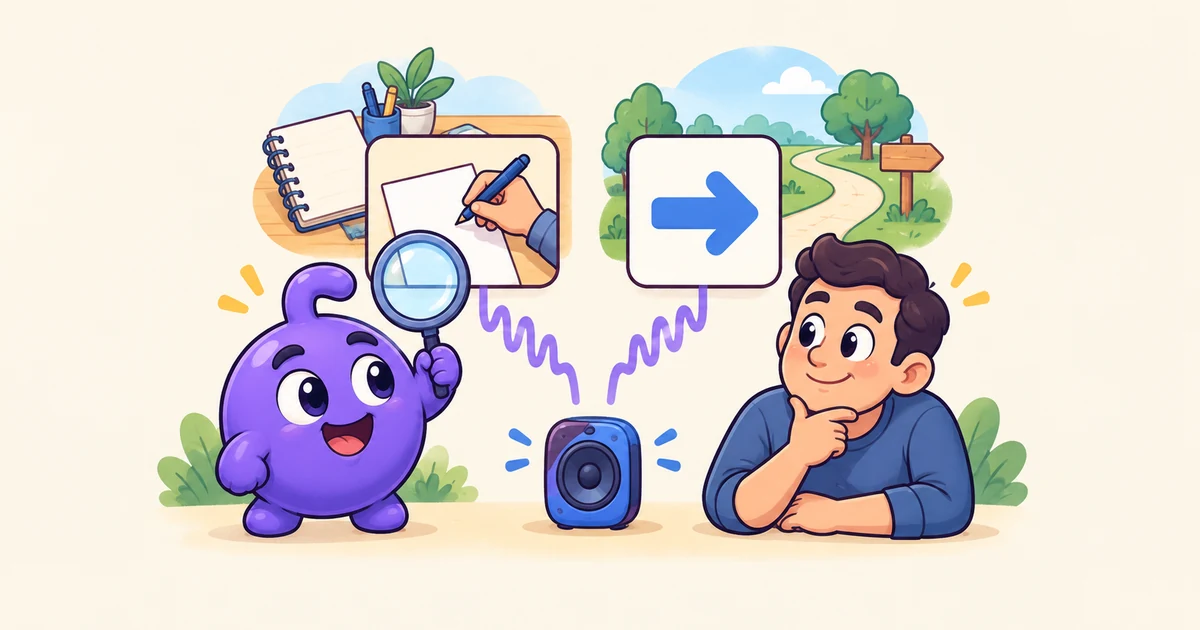
Homophones are words that have the same pronunciation but different meanings, and they often have different spellings, such as right and write. Because the sound alone may not identify the word, use the sentence’s grammar and meaning to choose the correct spelling.
The examples below are common homophones in American English. Pronunciation can vary by region, and a function word such as to may sound different when it is reduced in a fast sentence.
1. There, their, and they’re
- there: a place, position, or existence — “Your bag is over there.”
- their: belonging to them — “Their bags are ready.”
- they’re: the contraction of they are — “They’re ready to leave.”
“Their bags are over there, and they’re ready.”
Use the replacement test for they’re: if they are fits the sentence, the contraction is possible.
2. Your and you’re
- your: belonging to you — “Is this your ticket?”
- you’re: the contraction of you are — “You’re in the right line.”
“You’re holding your ticket.”
Again, expand the contraction. “You are holding your ticket” works, but “Is this you are ticket?” does not.
3. Hear and here
- hear: perceive sound — “Can you hear the announcement?”
- here: in this place — “Please wait here.”
“I can hear Ben from here.”
The verb after can points to hear; the phrase from here points to a place.
4. Right and write
- right: correct, or the direction opposite left — “That answer is right.”
- write: form words or text — “Please write your address.”
“Write the right address.”
The silent w in write changes the spelling, not the pronunciation.
5. Peace and piece
- peace: calm or the absence of conflict — “I just want some peace and quiet.”
- piece: a part of something — “Ben ate a piece of fruit.”
“Mia ate a piece of fruit in peace.”
The surrounding words give the clue: a piece of names one part, while in peace describes a calm situation.
6. Brake and break
- brake: a device or action used to slow or stop movement — “Press the brake gently.”
- break: damage something, or a short rest from an activity — “Let’s take a short break.”
“Ben pressed the brake and pulled over to take a break.”
A car or bicycle gives you the brake clue; work or rest gives you the break clue.
7. Pair and pear
- pair: two things considered together — “I need a pair of socks.”
- pear: a type of fruit — “Emma sliced a pear.”
“Sam bought a pair of pears.”
Two matching things point to pair; fruit points to pear.
8. To, two, and too
- to: a preposition or part of an infinitive — “Send it to Emma.”
- two: the number 2 — “She sent two notes.”
- too: also, or more than needed — “Ben is coming too.”
“I sent two notes to Emma too.”
When spoken clearly in isolation, the three words can share /tu/. In connected speech, unstressed to often reduces, so the three may not sound identical in every sentence.
Homophones are not minimal pairs
Homophones have the same pronunciation and different meanings. Minimal pairs have different meanings and pronunciations that differ by only one sound:
- Homophones: right and write — same pronunciation
- Minimal pair: sheep and ship — /i/ changes to /ɪ/
Use Ledoly’s minimal-pairs practice to hear one-sound contrasts, or study the vowel difference in the sheep and ship guide.
How to choose the correct homophone
- Identify the job in the sentence. Do you need a noun, verb, contraction, possessive word, or preposition?
- Check the meaning around it. A location suggests here; sound suggests hear.
- Expand a contraction. Replace you’re with you are or they’re with they are.
- Read the whole sentence again. A spelling checker may accept the wrong homophone because both forms are real words.
If the spoken context is still unclear, use a direct question from Ledoly’s guide to asking someone to repeat or clarify.
Practice: choose the correct homophone
- (Their / There / They’re) waiting near the front desk.
- Please (write / right) your phone number here.
- Can you (hear / here) the speaker?
- Emma brought a (pair / pear) of gloves.
- Sam wants (to / two / too) join us, (to / two / too).
- Press the (brake / break) before the turn.
Answer key
- They’re — they are fits before waiting.
- write — the sentence asks someone to form the number in text.
- hear — the sentence asks about perceiving sound.
- pair — the sentence means two matching gloves.
- to; too — to introduces the verb join; too means also.
- brake — the sentence refers to slowing a vehicle.
Frequently asked questions
What is a homophone?
A homophone is a word with the same pronunciation as another word but a different meaning. The two words often have different spellings, as in peace and piece.
What is the difference between a homophone and a homonym?
Homophone specifically describes words that sound the same. Homonym is used more broadly for words that share a sound or spelling but have different meanings, although dictionaries and teaching materials do not always use the broader term in exactly the same way.
Are homophones the same in every English accent?
No. Two words may be homophones in one regional accent but not another. The groups in this guide are common in American English, with the connected-speech note for to, two, and too.
Can a spelling checker find every homophone error?
No. The wrong homophone may still be a correctly spelled word. Check the grammar and meaning of the full sentence instead of relying on spelling alone.
Sources
- Dictionary.com: Homophone — defines a homophone as a word pronounced like another word but differing in meaning and provides common examples.
- Merriam-Webster: Guide to Pronunciation — explains regional pronunciation variation and the dictionary’s treatment of accepted variants.