English Phone Calls: Phrases That Keep You on Track
A clear English phone call has five practical steps: identify yourself, state why you are calling, manage the next action, confirm important details, and close with a clear next step.
By the Ledoly team
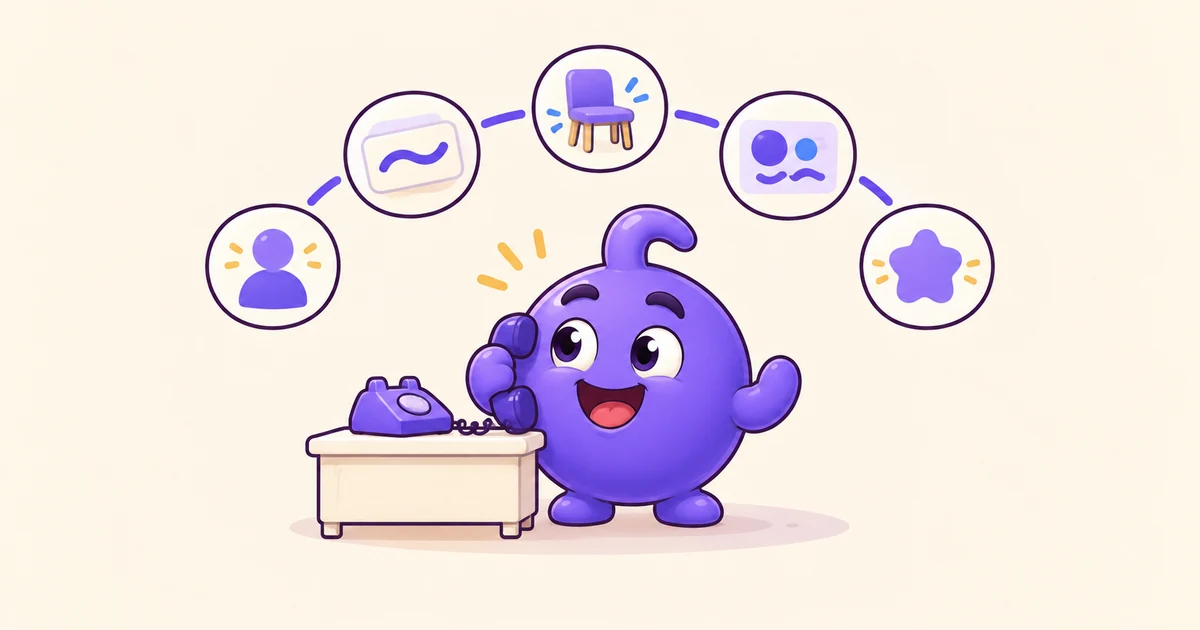
A clear English phone call has five practical steps: identify yourself, state why you are calling, manage the next action, confirm important details, and close with a clear next step. You do not need a long script. A few flexible phrases can guide both everyday and workplace calls when you cannot see the other person’s face.
Emma: Hello, this is Emma.
Ben: Hi, Emma. This is Ben. I’m calling about tomorrow’s appointment.
Emma: Sure. What would you like to check?
Both speakers identify themselves quickly, and Ben gives the purpose of the call in one sentence.
The five-step phone-call flow
- Identify: Say who you are, or identify the organization that answered.
- Purpose: Explain why you are calling or ask for the person you need.
- Next action: Connect the caller, ask them to wait, take a message, or solve the request.
- Confirm: Repeat names, dates, times, addresses, or numbers.
- Close: State what will happen next, thank the person, and say goodbye.
This flow is a guide, not a rigid script. A call with a friend may need only the first two and last steps. A call about an appointment or delivery may need all five.
How to answer the phone
On a personal call, simple options include:
- Hello?
- Hi, this is Mia.
- Hey, it’s Mia.
On a business line, identify the organization and yourself:
- Green Street Dental, Mia speaking. How can I help you?
- Northside Office, this is Ben. How may I help?
When identifying yourself on the phone, This is Emma, Emma speaking, and My name is Emma are useful patterns. Cambridge’s telephoning guide notes that phone introductions use forms such as my name is, this is, or it’s.
How to start your call
Give your name and purpose early:
- Hi, this is Sam. I’m calling about my appointment.
- Hello, my name is Emma. I’m calling to check on my order.
- Hi, Ben. It’s Mia. Do you have a minute?
If a greeting comes first, keep it brief and move to the reason for the call. Ledoly’s guide to “How are you doing?” explains when a short answer is enough.
Say call someone, not call to someone: “I’ll call Sam this afternoon.” You can still use calling to plus a verb to give your reason: “I’m calling to confirm my appointment.” Call to someone means shouting to them, for example across a room.
How to ask for someone
Use one of these:
- Could I speak with Emma, please?
- May I speak to Ben?
- Is Sam available?
- Hi, is Mia there?
The last option is more casual. If you answer and need to know who is calling, ask:
- May I ask who’s calling?
- Could I have your name, please?
- Who’s calling, please?
Caller: Could I speak with Emma, please?
Mia: May I ask who’s calling?
Caller: This is Ben from Northside Office.
Mia: Thanks, Ben. Please hold for a moment.
How to ask someone to wait
If you need time to find information or connect the call, say:
- Could you hold for a moment, please?
- Would you mind holding for a minute?
- One moment, please. I’ll check.
- I’ll put you through now.
Do not leave the caller without an explanation. Say what you are doing and return with an update if the wait becomes longer than expected.
When the person is not available
State the situation briefly and offer a next step:
- Emma isn’t available right now. Can I take a message?
- Ben is away from his desk. Would you like to leave a message?
- Sam is in a meeting until three. Would you like him to call you back?
- I’m sorry, Mia is not in today. You can call back tomorrow, or I can take a message.
A useful message contains the caller’s name, contact information, reason for calling, and requested next step.
Emma: Ben is in a meeting. Can I take a message?
Sam: Yes, please. This is Sam Lee. Could you ask him to call me about Friday’s delivery?
Emma: Of course. What number should he use?
Sam: 555-0148.
Emma: That’s 555-0148, about Friday’s delivery.
Sam: That’s right. Thank you.
How to confirm names and numbers
Phone audio can hide small differences. Repeat important details:
- Could you spell your last name?
- Did you say 14 or 40?
- Let me read that back to you.
- Just to confirm, the appointment is Friday at 2:30.
- I have 555-0148. Is that correct?
Break long strings into small groups. For an address, confirm the street number, street name, city, and ZIP code separately. For a time or date, include the day as well as the number.
If you miss something, say what happened and ask for the exact detail: “Sorry, the connection cut out. Could you repeat the street number?” Ledoly’s guide to understanding fast American English can help you identify the listening patterns you miss most often.
How to end the call
Before saying goodbye, state the next step:
- Great. I’ll send the confirmation this afternoon.
- Okay, Emma will call you back before five.
- So we’re meeting Friday at 2:30.
- Thanks for your help. Have a good day.
- Thanks for calling. Goodbye.
A short recap prevents uncertainty after the call ends.
Complete example: an appointment call
Mia: Green Street Dental, Mia speaking. How can I help you?
Ben: Hi, this is Ben Carter. I’m calling to confirm my appointment.
Mia: Of course. Could you give me the date?
Ben: I have Friday, October 9 at 2:30.
Mia: Let me check. Yes, Friday at 2:30 with Dr. Lee.
Ben: Great. And the address is 18 King Street, right?
Mia: That’s correct.
Ben: Perfect. Thank you for confirming.
Mia: You’re welcome. We’ll see you Friday. Goodbye.
For more listening situations involving calls and messages, visit Ledoly’s Phone, Email & Tech section.
Practice: complete the call
Fill each blank with a natural phrase. More than one answer may work.
Emma: Northside Office, Emma (1) ________. How can I help you?
Sam: Hi, this is Sam. I’m (2) ________ about tomorrow’s delivery. Could I speak with Ben, please?
Emma: Ben is away from his desk. Would you like to leave a (3) ________?
Sam: Yes, please. Could you ask him to call me back?
Emma: Of course. What number should he use?
Sam: 555-0136.
Emma: Let me (4) ________ that: 555-0136.
Sam: That’s right.
Emma: I’ll ask Ben to call you about tomorrow’s delivery.
Sam: Thank you. (5) ________.
Emma: Goodbye.
Answer key
- speaking
- calling
- message
- confirm or repeat. With read back, say “Let me read that back.”
- Goodbye or Have a good day
The completed call follows the five steps: Emma identifies the office, Sam states the purpose, Emma offers a next action, they confirm the number, and both close clearly.
Frequently asked questions
Should I say “This is Emma” or “I am Emma” on the phone?
“This is Emma” and “Emma speaking” are natural phone introductions. “My name is Emma” also works, especially when the listener does not know you. “I am Emma” is grammatically possible but is not the usual phone-identification pattern.
How do I ask who is calling?
Say “May I ask who’s calling?” or “Could I have your name, please?” “Who’s calling, please?” is shorter and also polite.
What should I say when someone is unavailable?
State that the person is unavailable and offer a next step: “Sam isn’t available right now. Can I take a message?” You can also offer a callback or a better time to call.
How do I end a phone call politely?
Confirm the next step, thank the person, and say goodbye. For example: “Great. I’ll send the form today. Thanks for your help. Goodbye.”
Sources and further practice
- Cambridge Dictionary: Telephoning — phone introductions, asking for someone, holding, messages, and closing.
- Cambridge Dictionary: Call — the verb pattern call someone.
- British Council LearnEnglish: Leaving a message — taking a message and reading back contact details.