Voicemail Greetings in English: Clear, Natural Scripts
A clear voicemail greeting identifies you, says you cannot answer, tells the caller what to leave, and closes politely.
By the Ledoly team
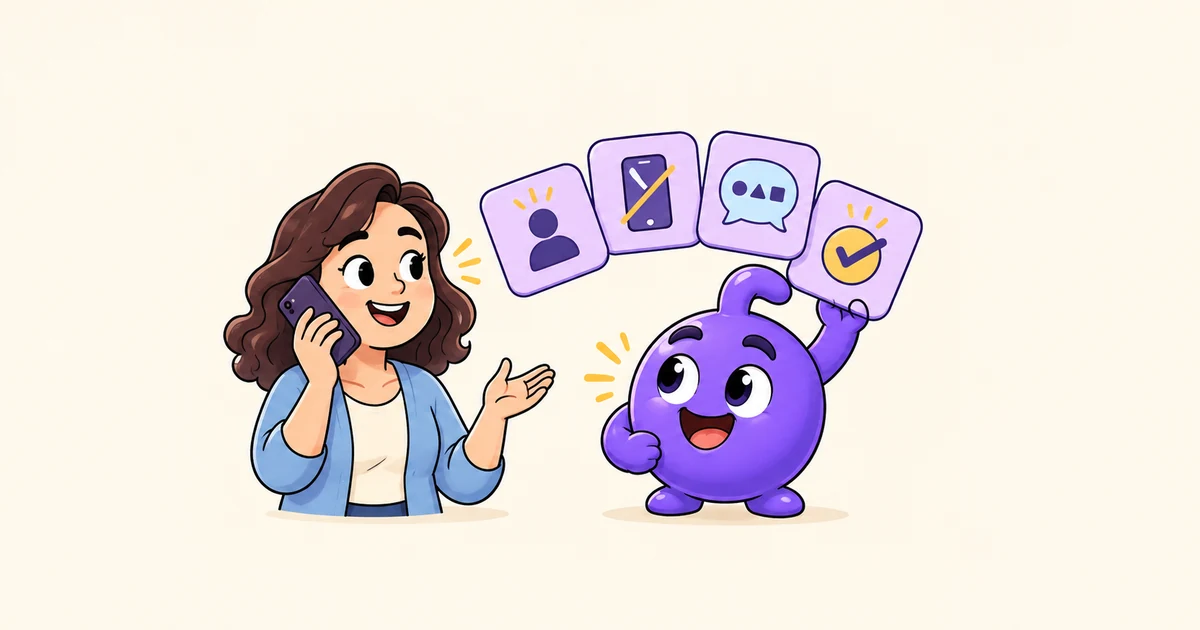
A clear voicemail greeting has four essential parts: your name, a brief statement that you cannot answer, a request for the caller’s name and message, and a polite closing. Keep it short, speak at a comfortable pace, and record it in a quiet place.
“Hi, you’ve reached Mia Lee. I can’t answer right now. Please leave your name, number, and a brief message, and I’ll return your call. Thank you.”
This is an outgoing greeting: the recording callers hear before they leave a message. It is different from the message a caller records after the tone. If you need language for a live conversation instead, use Ledoly’s English phone-call phrases.
A simple voicemail greeting formula
- Greet the caller and identify the mailbox: “Hi, you’ve reached Ben Carter.”
- Say you cannot answer: “I’m not available right now.”
- Give the next step: “Please leave your name, number, and a brief message.”
- Close: “I’ll get back to you. Thank you.”
You do not need to apologize at length or explain where you are. The caller mainly needs to know that the number is correct and what information to leave.
Personal voicemail greeting scripts
Simple personal greeting
“Hi, you’ve reached Sam. I can’t answer right now. Please leave your name, number, and a message. I’ll call you back when I can. Thanks.”
This version is friendly and neutral. Use a first and last name if callers may not already know you.
Greeting that also invites a text
“Hi, this is Emma Brown. I can’t answer right now. Please leave a message, or send me a text if that’s easier. Thanks.”
Only offer a text if this is a number where you want to receive text messages.
Professional voicemail greeting scripts
Job-search greeting
“Hello, you’ve reached Ben Carter. I’m sorry I missed your call. Please leave your name, phone number, and a brief message, and I’ll return your call as soon as I can. Thank you.”
This greeting identifies Ben clearly without naming a current employer or giving personal details. That makes it useful when a recruiter, client, or new contact may call.
Work-line greeting
“Hello, you’ve reached Mia Lee in customer support at Northstar. I’m away from my phone right now. Please leave your name, number, and the reason for your call. I’ll respond as soon as I can. Thank you.”
Use your organization or department only when it helps callers confirm that they reached the right place. Follow your workplace’s rules if it requires specific wording or an alternate contact.
Extended-absence greeting
“Hello, you’ve reached Sam Rivera at Northstar. I’m out of the office through Thursday, October 15, and will return on Friday, October 16. Please leave a message. For urgent scheduling questions, call the main office at 212-555-0142. Again, that’s 212-555-0142. Thank you.”
An extended-absence greeting should give a useful return date and, when appropriate, a real alternate contact. Update or turn off the greeting when you return. Avoid promising an exact response time unless you know you can meet it.
How to record the greeting clearly
- Write the script first. A short script helps you avoid fillers and restarts.
- Record in a quiet place. Turn off music and move away from background conversations.
- Say your name distinctly. A caller should be able to confirm the mailbox without guessing.
- Use short thought groups. Pause lightly after your name and before the caller’s next step.
- Play it back. Check the volume, pace, name, dates, and phone number before saving it.
- Test the mailbox. Call from another phone and confirm that a caller can leave a message.
If a date, number, or name is difficult to catch, the repair phrases in how to ask someone to repeat or clarify can also help during the return call.
Common mistakes to avoid
- No name: Callers may wonder whether they reached the correct number.
- Too much detail: Your exact schedule and location are usually unnecessary.
- No next step: Ask for the information you need to return the call.
- An outdated absence message: A past return date can confuse callers.
- A rushed phone number: If you give an alternate number, say it in small groups and repeat it once.
Practice: build a professional greeting
Use these details to write a greeting:
- Name: Emma Davis
- Situation: unable to answer
- Request: caller’s name, number, and brief reason for calling
- Promise: return the call when possible
Record your version once. Then listen for four things: a clear name, a short explanation, one clear request, and a polite close.
Answer key
“Hello, you’ve reached Emma Davis. I’m unable to answer right now. Please leave your name, number, and a brief reason for your call. I’ll return your call when I can. Thank you.”
Your wording can differ. Keep the same information order so the caller does not have to search for the next step.
Frequently asked questions
What should I say in a voicemail greeting?
Say your name, state briefly that you cannot answer, ask the caller to leave a name, number, and message, and close politely. Add a workplace name, return date, or alternate contact only when it is useful.
How long should a voicemail greeting be?
It should be long enough to identify you and give a clear next step, but short enough for a caller to hear easily. A simple personal or professional greeting is usually four or five short sentences.
Should I say “Sorry I missed your call”?
You may, but it is not required. “I’m sorry I missed your call” sounds warm, while “I’m unable to answer right now” is direct and neutral. Choose the version that fits your setting.
Is a voicemail greeting the same as leaving a voicemail?
No. A voicemail greeting is the outgoing recording callers hear. Leaving a voicemail means recording a message for another person after hearing that person’s greeting.
Sources
- Case Western Reserve University Center for Career Success: Phone Etiquette — recommends a polite, direct greeting that identifies the mailbox and requests the caller’s name, number, and brief message.
- Stanford University IT: Manage Your Voicemail Greetings — distinguishes standard and extended-absence greetings and explains the role of a recorded name and alternate contact.
- Shenandoah University Career & Professional Development: Professionalism — advises stating your name so callers know they reached the correct person.