Linking Words for Speaking English Clearly
Use because for a reason, so for a result, but or though for contrast, and for example to make a spoken idea easier to follow.
By the Ledoly team
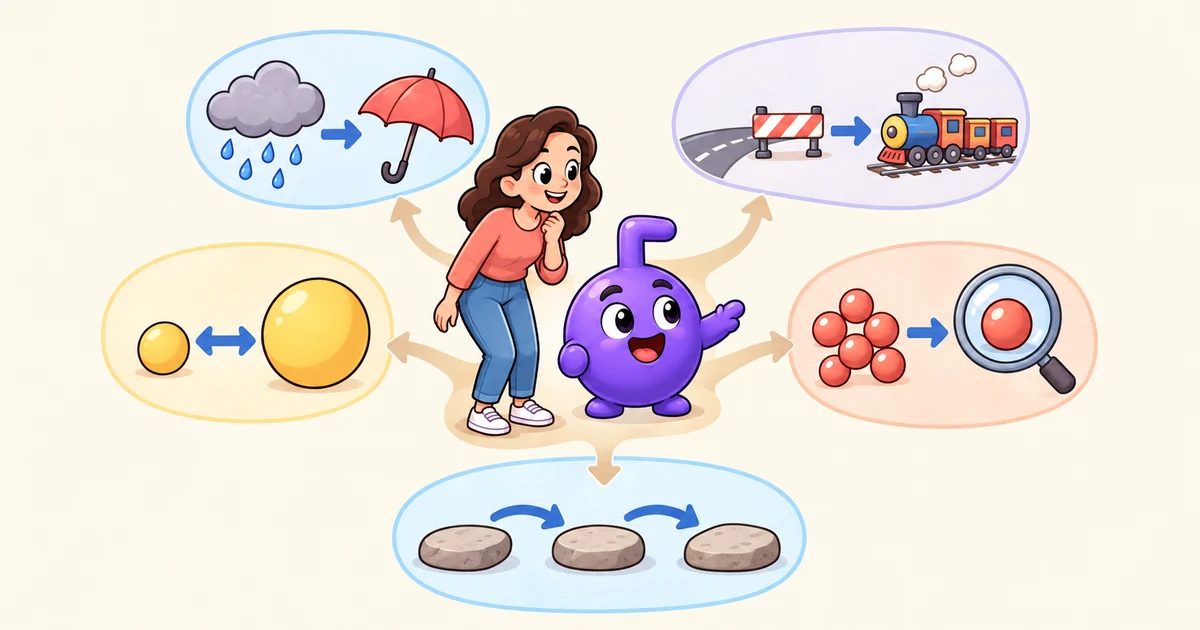
Linking words for speaking show relationships between ideas: use because to give a reason, so to show a result, but or though to show contrast, and for example to add a specific case. For a sequence, guide the listener with words such as first, then, and finally.
Linking words show how one idea relates to the next; in American classrooms, they are often called transition words. They help a listener recognize whether you are adding information, explaining a cause, describing a result, changing direction, giving an example, or moving through steps. In this guide, linking means connecting ideas—not joining speech sounds.
A quick guide to linking words for speaking
| Job | Useful linking words | Spoken example |
|---|---|---|
| Add information | and, also | “The room is quiet, and it has good light.” |
| Give a reason | because | “Mia left early because she felt sick.” |
| Show a result | so, that’s why | “The road was closed, so Ben took the train.” |
| Show contrast | but, though, however | “The task was difficult, but Sam finished it.” |
| Give an example | for example, like | “Try a short activity, for example, reading aloud.” |
| Show sequence | first, then, after that, finally | “First, open the file. Then, check the date.” |
You do not need a long list of formal transitions for ordinary conversation. A small set of clear, high-frequency choices will cover many situations.
Use because for a reason and so for a result
Because introduces the cause or reason. So introduces the result:
- Reason: “Emma moved the meeting because two people were absent.”
- Result: “Two people were absent, so Emma moved the meeting.”
The facts are the same, but the direction changes. With because in the middle of the sentence, the listener hears the result first and then the reason. With so, the listener hears the reason or situation first and then the result.
In standard English, do not use because and so together for the same cause-and-result connection:
- Clear: “Because the store was closed, we came back later.”
- Clear: “The store was closed, so we came back later.”
- Avoid: “Because the store was closed, so we came back later.”
That’s why also introduces a result and often begins a new spoken sentence: “My train was delayed. That’s why I arrived late.”
Use but, though, and however for contrast
These words connect ideas that differ or create an unexpected combination, but their positions and registers are not identical.
But: the everyday default
But is concise and natural in both everyday and workplace conversation:
“I understand the plan, but I have one question.”
It joins the two contrasting ideas directly. Do not add but after although: say “Although the room was small, it was comfortable” or “The room was small, but it was comfortable.”
Though: a conversational afterthought
Though is common in spoken English, especially at the end of a sentence:
“The walk was long. The view was beautiful, though.”
This end position lets the speaker add a short contrast after stating the main point. Though can also introduce a clause: “Though the walk was long, the view was beautiful.”
However: a more structured transition
However is common in writing and can sound more planned or formal in speech. It is useful in a presentation or organized update:
“The first option costs less. However, the second option is faster.”
When writing, do not join two complete sentences with only a comma before however. Use a period or semicolon. In speech, make a clear pause before the transition.
| Connector | Typical spoken register | Useful position |
|---|---|---|
| but | Neutral; everyday and workplace-safe | Between two contrasting ideas |
| though | Neutral to casual | Before a clause or at the end as an afterthought |
| however | Neutral to formal; structured | Often at the start of a new sentence or thought group |
Use for example to make an idea concrete
A general claim becomes easier to understand when you follow it with a specific case:
“Short daily practice can fit into a busy schedule. For example, you can review five phrases during lunch.”
For example is neutral and works in conversation, meetings, and presentations. Like can introduce examples in more casual speech: “We need basic supplies, like paper and pens.” In careful formal writing, such as is often a clearer choice for introducing examples.
One useful speaking pattern is point + because + reason + for example + detail:
“I prefer the morning session because I focus better early. For example, I finished yesterday’s review before nine.”
The connectors reveal the structure before the listener has to guess it.
Use first, then, and finally for a sequence
Sequence words help with instructions, stories, and progress updates:
- “First, save a copy of the document.”
- “Then, add your comments.”
- “After that, send it to Emma.”
- “Finally, confirm that she received it.”
You do not need a connector before every sentence. Use one when the order might otherwise be unclear. Repeating and then many times can make a story sound flat; changing some steps to first, after that, and finally makes the path easier to follow.
Pause so the connector can guide the listener
A linking word works best when it begins a clear group of meaning. In a longer answer, pause briefly before a new contrast, example, or step:
“We can finish today / because the last section is short. / However, / we still need a final check.”
The slashes show possible thought-group boundaries, not required punctuation. Do not pause after every word. Keep each short idea together, and let the connector signal what comes next. Ledoly’s guide to thought groups and pausing explains how to divide longer speech without sounding choppy.
Register also matters. A quick conversation may use but and sentence-final though, while a structured update may use however and for example. Compare more choices in Ledoly’s guide to email English and meeting English.
Practice: choose the best linking words
Use each word or phrase once: also, because, but, finally, first, for example, however, so, then, and though.
- I stayed home ___ the roads were icy.
- The report is short, ___ it covers the main points.
- The printer stopped working, ___ Sam emailed the file.
- Several details need attention. ___, the date on page two is wrong.
- ___, check the address at the top of the form.
- Next, sign the form. ___, add today’s date. Last, place it in the blue folder.
- The restaurant was crowded. The service was fast, ___.
- Mia finished the draft. She ___ checked every link.
- Plan A costs less. ___, Plan B can start sooner.
- We reviewed the changes, answered the questions, and discussed the budget. ___, after two hours, we agreed on the next step.
Answer key
- because — the second clause gives the reason.
- but — the short length contrasts with the report’s useful coverage.
- so — emailing the file was the result of the printer problem.
- For example — the wrong date is one specific detail.
- First — this introduces the first instruction.
- Then — this moves to the next instruction.
- though — sentence-final though adds a conversational contrast.
- also — this adds a second completed action.
- However — this begins a new sentence that contrasts the two plans.
- Finally — this introduces the last step in the sequence.
Now give a four-sentence update about your day. Include one reason with because, one result with so, one contrast with but or though, and one specific detail with for example.
Frequently asked questions
What are linking words in spoken English?
Linking words, also called transition words, are connectors that show the relationship between ideas. They can add information, give a reason, show a result or contrast, introduce an example, or organize a sequence.
What is the difference between because and so?
Because introduces a reason: “We left because it was late.” So introduces a result: “It was late, so we left.” In standard English, do not use both for the same cause-and-result connection.
What is the difference between but and however?
Both show contrast. But directly joins two ideas and is an everyday default. However often begins a new sentence or thought group and can sound more structured or formal.
Are linking words different in speaking and writing?
The core meanings are the same, but the choices and delivery can differ. Speaking often favors short connectors such as and, but, so, and sentence-final though; formal writing often uses more structured transitions and stricter punctuation.
Sources
- VOA Learning English: Using Discourse Markers in American English — explains how discourse markers connect sentences and signal relationships such as contrast in everyday speech.
- VOA Learning English: Using “Though” and “However” — explains that though is common in speech and at the end of a sentence, while however is especially common in writing.
- VOA Learning English: When You See an Adverb Clause, You’ll Know — explains how connectors show time, cause, contrast, and condition, including the cause-result relationship expressed with because and so.