Email English vs. Meeting English: What Changes?
Email and meeting English can carry the same message, but they organize context differently. Compare practical pairs for requests, updates, delays, ideas, and recaps.
By the Ledoly team
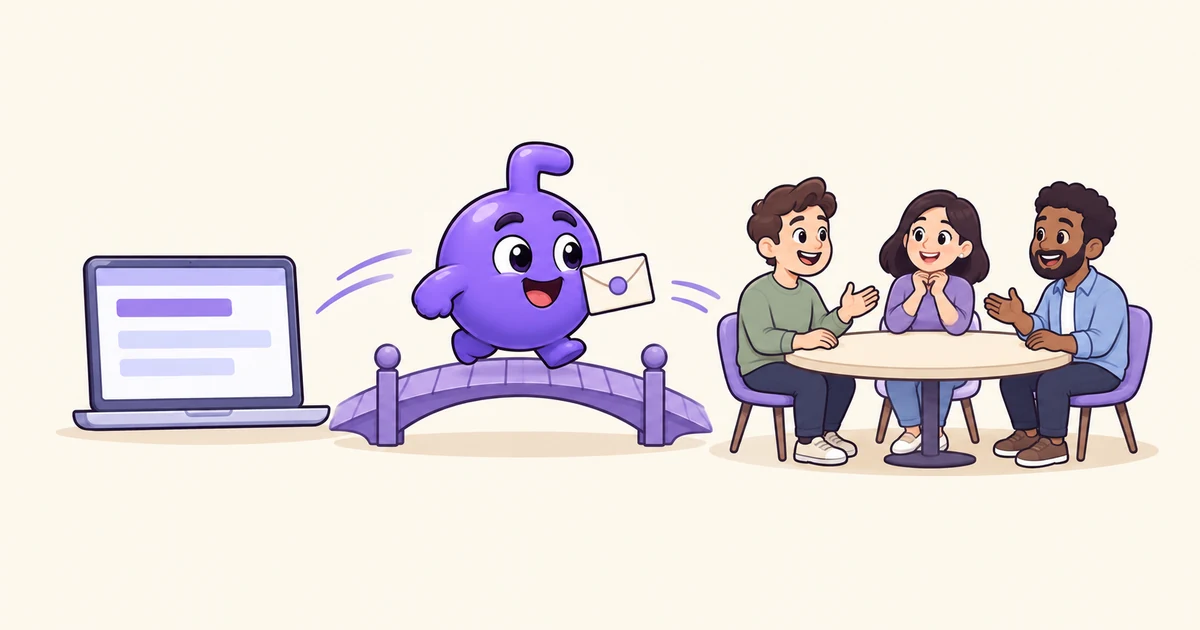
Email English usually needs enough context to stand on its own, while meeting English can be shorter because speakers can check meaning and respond immediately. The best version is not always more formal or less formal. It is the version that fits the audience, purpose, relationship, and channel.
| In an email | In a meeting |
|---|---|
| State why you are writing. | Connect your turn to what was just said. |
| Name the action, owner, and any date. | Make one point, then check or invite a response. |
| Include context the reader cannot see. | Use shared context, but clarify any uncertain reference. |
| Organize the message for later reading. | Keep the turn easy to follow in real time. |
An email can be informal, and a meeting can be formal. Channel does not decide register by itself. A short note to a close teammate may be casual; a presentation to senior leaders may use careful, formal speech.
1. Requests: write the action; say the point
In email, put the requested action where the reader can find it later. Include a date only when the work has a real time requirement.
Email: Hi Mia, could you review the opening section and send your comments by Thursday at noon? We’ll use the final text in Friday’s presentation. Thanks, Ben
In a meeting, the shared document and conversation may already supply the context:
Meeting: Mia, could you review the opening section by Thursday at noon? We need the final text for Friday.
The spoken version is shorter, but it still names the person, action, and date. Avoid converting a clear email into a vague meeting line such as “Can you handle that soon?”
2. Updates: lead with the result
Email readers may scan the first line and return later. Put the most useful result first, then add the detail they need.
Email: The test is complete, and all five pages opened correctly. I found one wording issue on the contact page and added it to the review list.
In a meeting, signal that you are giving an update and pause after the headline:
Meeting: Quick update: the test is complete, and all five pages opened correctly. There’s one wording issue on the contact page.
The phrase quick update helps listeners identify the purpose of the turn. If you miss part of a question during your update, use a focused repair phrase from Ledoly’s guide to asking someone to repeat or clarify.
3. Delays: name the change and the next step
A delay message needs more than an apology. The reader or listener needs the changed date, the current state, and any action required.
Email: The report will be ready on Wednesday instead of Tuesday. Two figures still need review. I’ll send the revised file by 3 p.m. Wednesday; no action is needed from you before then.
Meeting: The report is moving from Tuesday to Wednesday because two figures still need review. I’ll send it by three on Wednesday. You don’t need to do anything before then.
The meeting version uses shorter clauses because listeners cannot reread the sentence while you speak. The email version separates the update from the next action so the details remain easy to find.
4. Ideas: make the proposal visible
In an email, introduce the idea, explain why it may help, and end with the decision or response you need:
Email: I suggest moving the user test to Monday. That would give us one more day to review the instructions. Would Monday at 10 a.m. work for the team?
In a meeting, turn the proposal into a short question people can answer right away:
Meeting: Could we move the user test to Monday? That gives us one more day to review the instructions. Would ten work?
Do not make the spoken version so compressed that the benefit disappears. “How about Monday?” may be enough in a familiar conversation, but it may be unclear in a larger meeting.
5. Recaps: turn conversation into a record
A meeting recap converts live decisions into a message that can be checked later. Do not copy every sentence from the conversation. Record the decision, owner, date, and unresolved question.
Meeting close: To recap, Sam will revise the form by Tuesday, Emma will test it on Wednesday, and we’ll decide on publication after that test.
Follow-up email: Subject: Form review — next steps
Hi team,
Here are today’s next steps:
• Sam will revise the form by Tuesday.
• Emma will test it on Wednesday.
• We will decide on publication after the test.
Please reply if I missed an action.
Thanks,
Mia
The meeting close helps everyone leave with the same understanding. The email creates a compact record. For voice-only coordination, Ledoly’s English phone-call guide covers identifying the caller, stating the reason, and confirming details.
What changes when speech becomes writing?
Use this checklist when you turn a meeting point into an email:
- Replace vague references. Change that, there, or next week when the reader may not know what they mean.
- Add the reason for the message. The email may be read hours later or forwarded to someone who missed the conversation.
- Put the action early. Name who needs to do what and by when.
- Separate multiple actions. Use short paragraphs or a list when the reader must track several items.
- Add a useful subject line. “Thursday review: opening section” is easier to find than “Update.”
What changes when writing becomes speech?
Use this checklist when you bring an email point into a meeting:
- Lead with the purpose. Try “I have a quick update” or “I need to confirm one date.”
- Shorten the sentence structure. Give one idea, pause, then add the next.
- Keep essential names and dates. Short does not mean vague.
- Invite a response. Ask “Does Thursday work?” or “Is that how you understood it?”
- Notice listener feedback. If people look uncertain or ask a question, clarify before moving on.
Informal spoken reductions can appear in conversation, but they do not belong in every work email. Ledoly’s guide to gonna, wanna, and gotta explains how those forms shift across casual speech, messages, and more formal writing.
Practice: change the channel
Rewrite each message for the new channel. Keep the meaning, but change the organization.
- Email to meeting: “Hi Sam, I’m writing to ask whether you could send the final image by Friday at noon. We need it for the afternoon review.”
- Meeting to email: “Quick update: the call is moving to ten. Mia will send the new link.”
- Email to meeting: “I suggest testing the shorter form first because it has fewer fields. Would the team be available on Tuesday morning?”
- Meeting to recap email: “Ben will draft the page on Monday. Emma will review it Tuesday. We still need someone to check the links.”
Answer key
- Meeting: “Sam, could you send the final image by Friday at noon? We need it for the afternoon review.”
- Email: “Subject: Call moved to 10 a.m.
Hi team,
The [day] call has moved to 10 a.m. Mia will send the new link.
Thanks,
Sam” - Meeting: “Could we test the shorter form first? It has fewer fields. Would Tuesday morning work?”
- Recap email: “Subject: Page draft — next steps
Hi team,
Ben will draft the page on Monday, and Emma will review it on Tuesday. We still need an owner for the link check. Please reply if you can take it.
Thanks,
Mia”
These are models, not the only correct answers. Check whether each version gives its audience enough context and a clear next step. For more workplace listening, explore Phone, Email & Tech on Ledoly Accent Radio.
Frequently asked questions
Is email English always more formal than meeting English?
No. Register depends on the audience, purpose, relationship, and situation as well as the channel. A note to a close teammate may be informal, while a formal presentation may use careful spoken language.
Why does a good email need more context?
The reader cannot ask an immediate question and may open the message later or without hearing the earlier conversation. Name the topic, action, owner, and any deadline so the message can stand on its own.
Should I use complete sentences in meetings?
Use sentences that are clear enough for the listener, but they can be shorter than written sentences. State one idea at a time, keep essential names and dates, and pause for a response.
What belongs in a follow-up email after a meeting?
Record the decision, each action, its owner, its date, and any unresolved question. A follow-up email is a usable record, not a transcript of everything people said.
Sources and further practice
- British Council TeachingEnglish: Register — register, described as formal, neutral, or informal, depends on context, purpose, and audience.
- British Council TeachingEnglish: The Teaching of Comprehension — Gillian Brown’s “Listening Comprehension” chapter contrasts interactive speech, which provides immediate listener feedback, with writing, which does not.
- Purdue OWL: General guidelines for business writing — audience, concise wording, front-loaded information, actions, dates, and clear organization.
- GOV.UK Service Manual: Planning and writing text messages and emails — for public-service messages: concise writing, important information in the first sentence, clear actions, and explicit deadlines.