Question Tags in English: Rules and Intonation
Form question tags by reversing positive and negative, matching the verb and pronoun, and choosing an intonation that fits your purpose.
By the Ledoly team
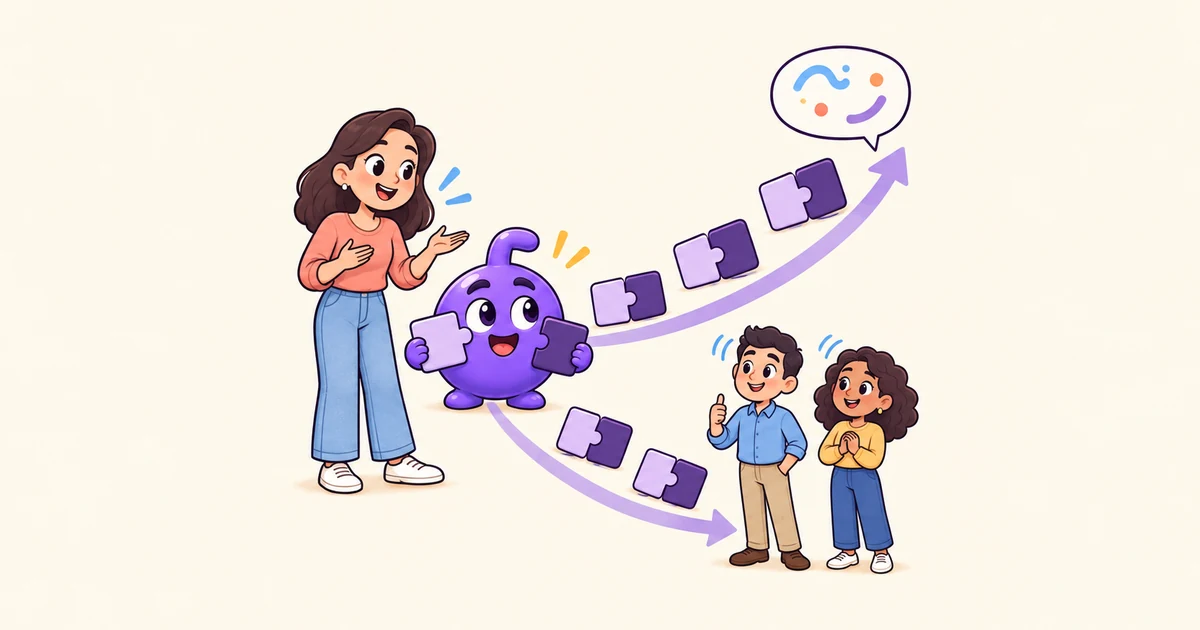
Question tags are short questions added to statements. Use a negative tag after a positive statement and a positive tag after a negative statement; match the statement’s auxiliary or modal verb (use do, does, or did if there is none), and replace the subject with a pronoun. A rising voice usually checks information, while a falling voice usually invites agreement.
“Mia is here, isn’t she?” is a statement plus a question tag. The speaker thinks Mia is here and asks the listener to confirm it. Question tags are especially useful in conversation because they turn a statement into a quick check without requiring a completely new question.
The basic question-tag pattern
Start by checking whether the statement is positive or negative. Then reverse it in the tag:
| Statement | Tag | Complete sentence |
|---|---|---|
| Positive | Negative | “Ben is ready, isn’t he?” |
| Negative | Positive | “Emma isn’t busy, is she?” |
The negative tag normally uses a contraction: isn’t, don’t, hasn’t, or won’t. In ordinary conversation, “is not he?” and “does not she?” do not work as standard question tags.
Words such as never, nobody, and nothing already make a statement negative in meaning, so they take a positive tag:
- “Sam never drives to work, does he?”
- “Nobody has called, have they?”
Match the auxiliary verb
Reuse the auxiliary verb or modal verb that appears in the statement. Change it from positive to negative, or from negative to positive:
- “Mia is working, isn’t she?”
- “Ben hasn’t left, has he?”
- “They can hear us, can’t they?”
- “Emma won’t be late, will she?”
If a positive statement in the simple present or simple past has no auxiliary, make the tag with do, does, or did:
- “Sam works here, doesn’t he?”
- “Mia and Emma live nearby, don’t they?”
- “Ben sent the file, didn’t he?”
The verb be does not need do. Say “The room was quiet, wasn’t it?” rather than “The room was quiet, didn’t it?”
Match the subject with a pronoun
The tag normally replaces the statement’s subject with a pronoun:
| Subject in the statement | Pronoun in the tag | Example |
|---|---|---|
| Mia | she | “Mia called, didn’t she?” |
| Ben and Sam | they | “Ben and Sam agree, don’t they?” |
| the meeting | it | “The meeting starts at nine, doesn’t it?” |
| these chairs | they | “These chairs are available, aren’t they?” |
With indefinite subjects such as everyone, someone, and nobody, singular they is a natural choice: “Everyone received the update, didn’t they?”
Remember aren’t I?
The usual negative tag after I am is aren’t I?:
- “I’m on the guest list, aren’t I?”
- “I’m speaking next, aren’t I?”
After a negative statement, use the regular positive form: “I’m not too early, am I?”
Use rising or falling intonation
The grammar may stay the same while the speaker’s purpose changes. Intonation tells the listener whether the tag is a real check or mainly an invitation to agree.
- Rising tag: less certain. “The call starts at two, ↗doesn’t it?” The speaker wants confirmation because the time may be wrong.
- Falling tag: fairly certain. “That was a useful call, ↘wasn’t it?” The speaker expects the listener to share the opinion.
These are useful tendencies, not mechanical rules. Context, facial expression, and the relationship between speakers also affect the meaning. A falling tag can sound warm and inclusive, but a strongly stressed falling tag can sound as if the speaker is pressuring the listener to agree.
For more control over that difference, see Ledoly’s guide to polite intonation and tone. The guide to “How are you doing?” also shows how context and delivery change the purpose of familiar words.
Use right? as a simple conversational tag
In American conversation, right? is a common informal way to ask for confirmation. It can follow many statements without changing to match the verb or subject:
- “We’re meeting at ten, right?”
- “Emma sent the revised file, right?”
- “Ben isn’t joining us, right?”
Right? is convenient, but a full tag can show the grammar and your expectation more precisely. “Emma sent it, didn’t she?” clearly connects the past statement to did. In a formal message, a direct question such as “Could you confirm whether Emma sent it?” may be clearer than either conversational tag.
| Form | Typical register | Example |
|---|---|---|
| Full question tag | Neutral conversation | “You’ve met Sam, haven’t you?” |
| right? | Casual to neutral conversation | “You’ve met Sam, right?” |
| Direct confirmation question | Neutral to formal | “Could you confirm that Sam received the contract?” |
Answer with the facts, not the tag
A short answer reports what is true. The tag itself does not change the meaning of yes or no:
“Mia is working today, isn’t she?”
“Yes, she is.”
“Mia isn’t working today, is she?”
“No, she isn’t.”
The same negative question needs a different answer when the fact is positive:
“Mia isn’t working today, is she?”
“Yes, she is. She’s on the late shift.”
If Mia is working, say yes; if she is not working, say no, whatever form the question takes. After a negative question, a bare yes or no can be unclear, so add the short answer (“Yes, she is” / “No, she isn’t”) or a few words of detail.
Practice: complete the question tags
Write the missing tag.
- Mia is ready, ___?
- Ben doesn’t drive, ___?
- They finished the report, ___?
- Sam can join us, ___?
- Emma hasn’t replied, ___?
- I’m next, ___?
- Nobody called, ___?
- The room was quiet, ___?
- These seats are open, ___?
- You won’t forget, ___?
Now choose the more likely intonation:
- Ben cannot remember whether the meeting starts at three: “It starts at three, doesn’t it?”
- Emma enjoyed a sunny afternoon with Mia: “The weather was perfect, wasn’t it?”
Answer key
- isn’t she — positive is statement, negative is tag.
- does he — negative simple-present statement, positive does tag.
- didn’t they — positive simple-past statement, negative did tag.
- can’t he — repeat the modal can and make it negative.
- has she — negative has statement, positive has tag.
- aren’t I — this is the usual negative tag after I am.
- did they — nobody is negative in meaning, and the tag uses singular they.
- wasn’t it — repeat was and replace the room with it.
- aren’t they — repeat are and replace these seats with they.
- will you — negative won’t statement, positive will tag.
- Rising — Ben is genuinely checking information.
- Falling — Emma is fairly sure and invites Mia to agree.
Frequently asked questions
What is the basic rule for question tags?
Use a negative tag after a positive statement and a positive tag after a negative statement. Match the statement’s auxiliary or modal verb, use do, does, or did if there is none, and replace the subject with a pronoun.
Why do we say “isn’t it?” after a positive statement?
A standard question tag reverses the statement’s positive or negative form. Therefore, a positive statement with “is” takes a negative tag with “isn’t” and a pronoun that matches the subject: “The room is ready, isn’t it?” but “Mia is ready, isn’t she?”
Should a question tag rise or fall?
Use a rising tag when you are less certain and genuinely checking information. Use a falling tag when you are fairly certain and mainly expect the listener to agree. Context and tone can still change the effect.
Is “right?” a question tag in American English?
Right? works as a simple conversational tag that asks for confirmation. It is common in casual American conversation and does not change to match the statement’s verb or subject.
Sources
- British Council LearnEnglish: Question Tags — explains positive-to-negative and negative-to-positive formation, auxiliary matching, do/does/did, aren’t I?, and rising versus falling intonation.
- VOA Learning English: Tag Questions Are Easy, Aren’t They? — explains how tag questions check or confirm information and how intonation changes their purpose in American English.
- VOA Learning English: Text Messages and Internet Forums — identifies right? as a kind of tag question and describes its casual, conversational use in I know, right?