How to Ask for Help Politely in English
Use a clear request, the right level of politeness, and one specific detail to ask for help in everyday English.
By the Ledoly team
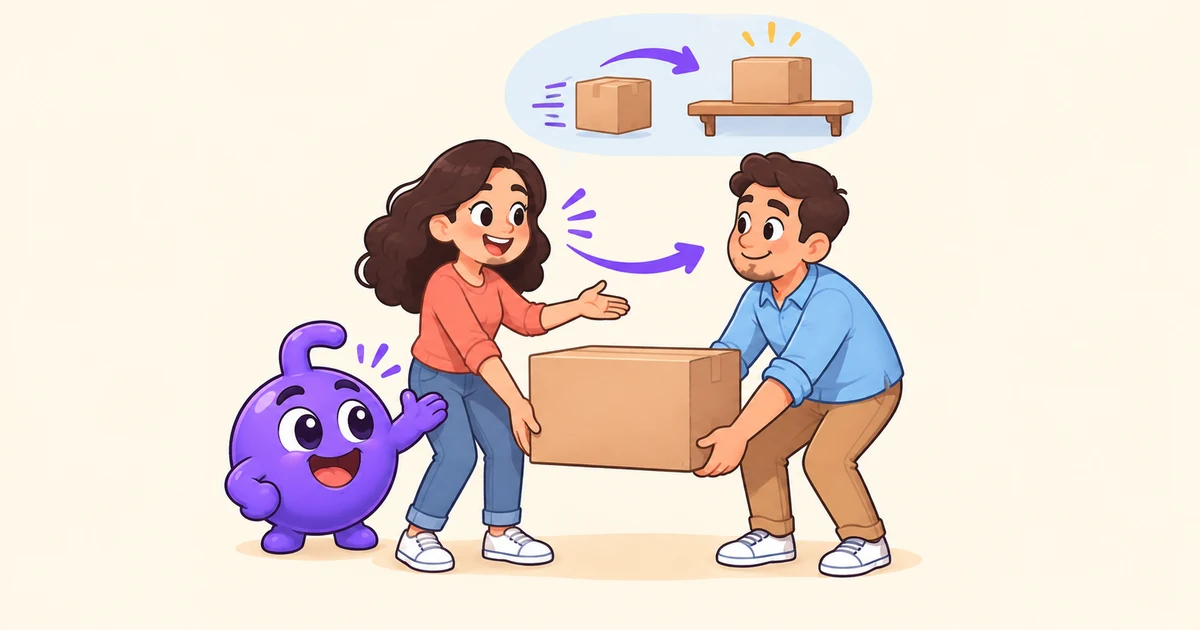
A reliable way to ask for help politely is, “Excuse me, could you help me with [specific task]?” Add one useful detail, give the person room to respond, and thank them. In an urgent situation, skip the long introduction and state the need directly.
A simple four-part request
Build an everyday request with four parts:
- Get attention: “Excuse me” or “Hi, Ben.”
- Ask: “Could you help me…?”
- Name the task: “…find Track 6?”
- Close: “Thank you.”
“Excuse me, could you help me find Track 6? Thank you.”
The specific task matters. “Could you help me?” is polite but vague. “Could you help me carry this box to the front desk?” tells the listener exactly what you need.
Choose a phrase for the situation
| Phrase | Best use | Register note |
|---|---|---|
| “Can you help me with this form?” | Familiar, everyday situations | Direct and common; tone and context still matter |
| “Could you help me with this form?” | Most everyday requests | Polite, neutral default |
| “Do you have a minute to help me check this?” | Work or a request that takes time | Checks the person’s availability |
| “Would you mind helping me move this chair?” | A careful or larger request | Polite and less direct; use mind + -ing |
| “I was wondering if you could help me with the schedule.” | A bigger request or first contact | More indirect and careful |
| “I need help. My friend fell and can’t get up.” | An urgent situation | Directness is appropriate when time matters |
Could you is a strong default because it works with strangers, coworkers, and service staff. Can you is more direct but can still be polite in a familiar situation. A calm voice and clear wording help; Ledoly’s guide to polite intonation explains how delivery changes the message.
Everyday examples
Ask a stranger for directions
“Excuse me, could you help me find the bus station?”
Ask for help in a store
“Could you help me reach that box, please?”
Ask a coworker for time
“Hi, Sam. Do you have ten minutes to help me check this report?”
Ask for help on a phone call
“Could you walk me through the login steps?”
If the call itself is difficult, use the openers and confirmation phrases in Ledoly’s English phone-call guide.
How to use “Would you mind…?”
Use a verb ending in -ing after Would you mind:
- “Would you mind helping me move this table?”
- “Would you mind showing me where to sign?”
- “Would you mind waiting a minute?”
The question literally asks whether the action is a problem. To accept, say “Not at all,” “Of course not,” or simply “Sure—I can help.” A bare “Yes” can be confusing because it may sound like “Yes, I do mind.”
Give the person room to answer
A polite request is still a request, not a command. If the task can wait, show that the other person has a choice:
- “Could you help me after lunch?”
- “If now isn’t a good time, when would work better?”
- “Do you have a minute, or should I come back later?”
If someone cannot help, respond without pressure:
“No problem. Who else should I ask?”
Be direct when the situation is urgent
Do not hide urgent information inside a long, indirect request. State the problem and the needed action:
- “I need help! Please call 911.”
- “Please help me. I think I’m going to faint.”
- “My child is missing. Please call security.”
These sentences are direct because speed and clarity matter. Use the local emergency number where you are, such as 911 in the U.S.
Common mistakes to avoid
- Too vague: “Help me with this.” Better: “Could you help me attach this file?”
- Too much background first: Give the request early, then add only the detail the listener needs.
- Using to after a modal: Say “Could you help?” not “Could you to help?”
- Using the wrong form after mind: Say “Would you mind helping?” not “Would you mind to help?”
- Repeating the demand: If the person hesitates, offer another time or ask who else might help.
If the answer is unclear, use a focused follow-up from Ledoly’s guide to asking someone to repeat or clarify.
Practice: make each request clearer and more polite
Rewrite each line for the situation. More than one answer may work.
- You need a stranger to point out the ticket machine: “Where is it?”
- You want Ben to review a short message when he has time: “Check this.”
- You want Emma to move one chair: “Would you mind to move this chair?”
- You need someone on the phone to explain the next step: “Help me.”
- Your friend fell and can’t get up: “I was wondering if perhaps you might be available to help.”
Answer key
- “Excuse me, could you show me where the ticket machine is?”
- “Ben, do you have a minute to help me check this message?”
- “Emma, would you mind moving this chair?”
- “Could you walk me through the next step?”
- “I need help. My friend fell and can’t get up.” The direct version fits the urgent situation.
Frequently asked questions
What is a polite way to ask for help in English?
Use “Excuse me, could you help me with [specific task]?” as a neutral default. State the task clearly, pause for the answer, and thank the person.
Is “Can you help me?” polite?
Yes, it can be polite in an everyday or familiar situation. “Could you help me?” is a little less direct and is a useful default with strangers, coworkers, or service staff.
How should I answer “Would you mind helping me?”
To accept, say “Not at all,” “Of course not,” or “Sure—I can help.” Avoid a bare “Yes,” which may sound like you do mind.
Should I still sound indirect in an emergency?
No. State the problem and needed action directly, such as “I need help! Please call 911.” Use the local emergency number where you are, such as 911 in the U.S. Clear, brief wording is appropriate when time matters.
Sources
- U.S. Department of State, American English: Teacher’s Corner—Modals — explains how request wording changes with context, formality, directness, and politeness.
- U.S. Department of State: Dialogs for Everyday Use — explains the grammar and response pattern for Would you mind…? requests.